
250 Special
engine
248 cc
power
9 hp
transmission
4 speed
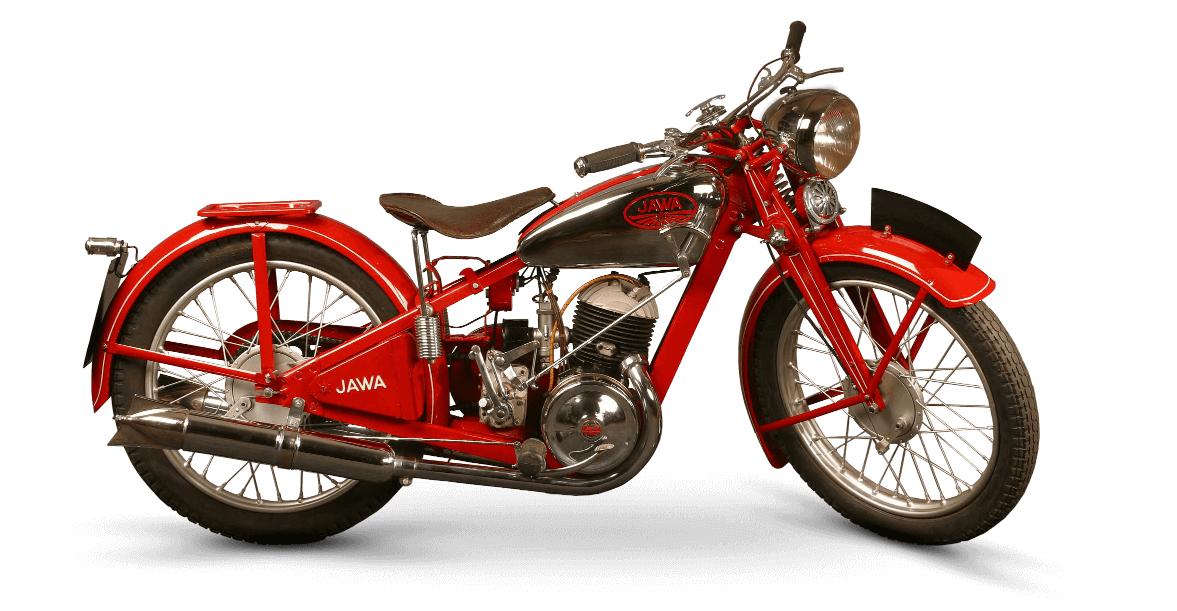
175 Villiers
engine
172 cc
power
6 hp
transmission
3 speed

350 SV
engine
346 cc
power
11 hp
transmission
4 speed
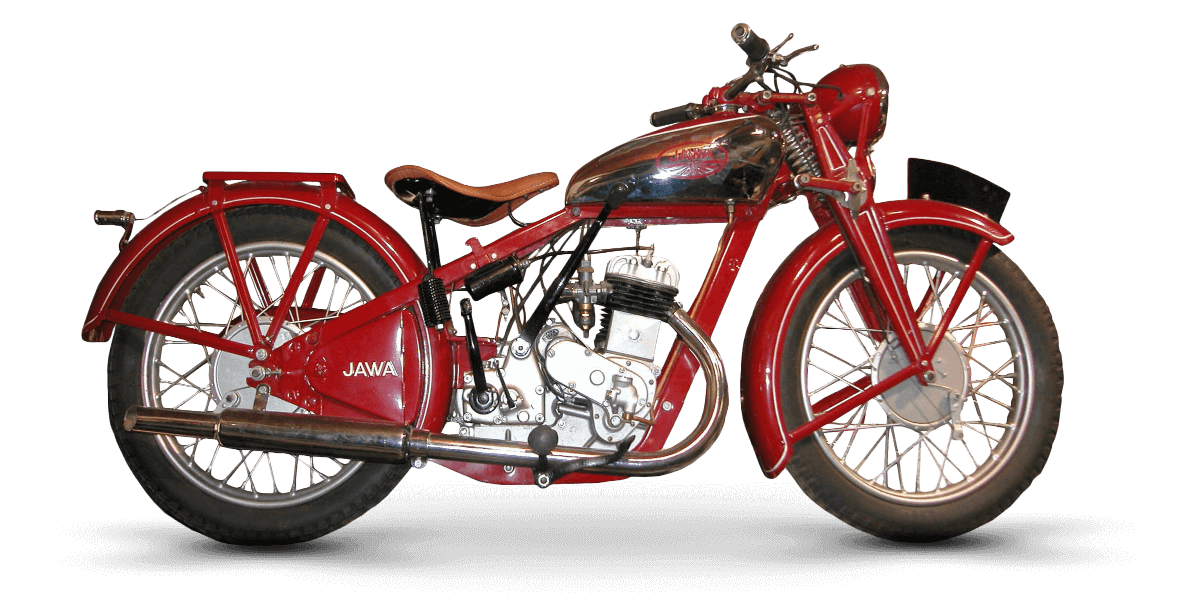
350 OHV
engine
346 cc
power
15 hp
transmission
4 speed
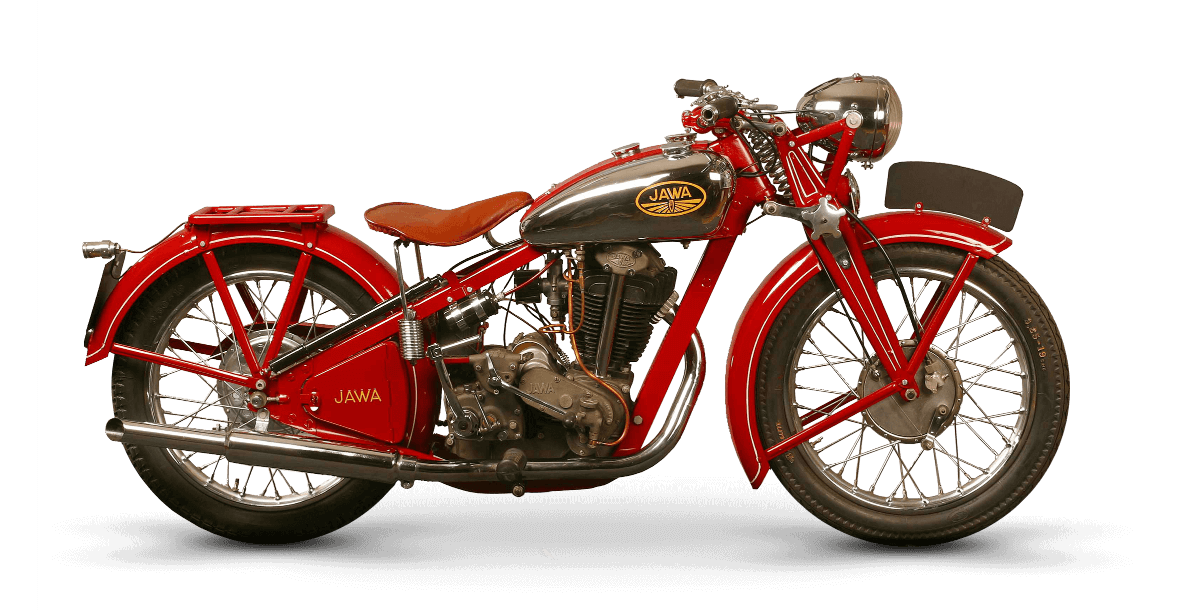
Duplex
engine
246 cc
power
9 hp
transmission
4 speed

Robot
engine
98.8 cc
power
2.6 hp
transmission
3 speed

Californian
engine
344 cc
power
24 hp
transmission
4 speed

350 T 360
engine
344 cc
power
18 hp
transmission
4 speed
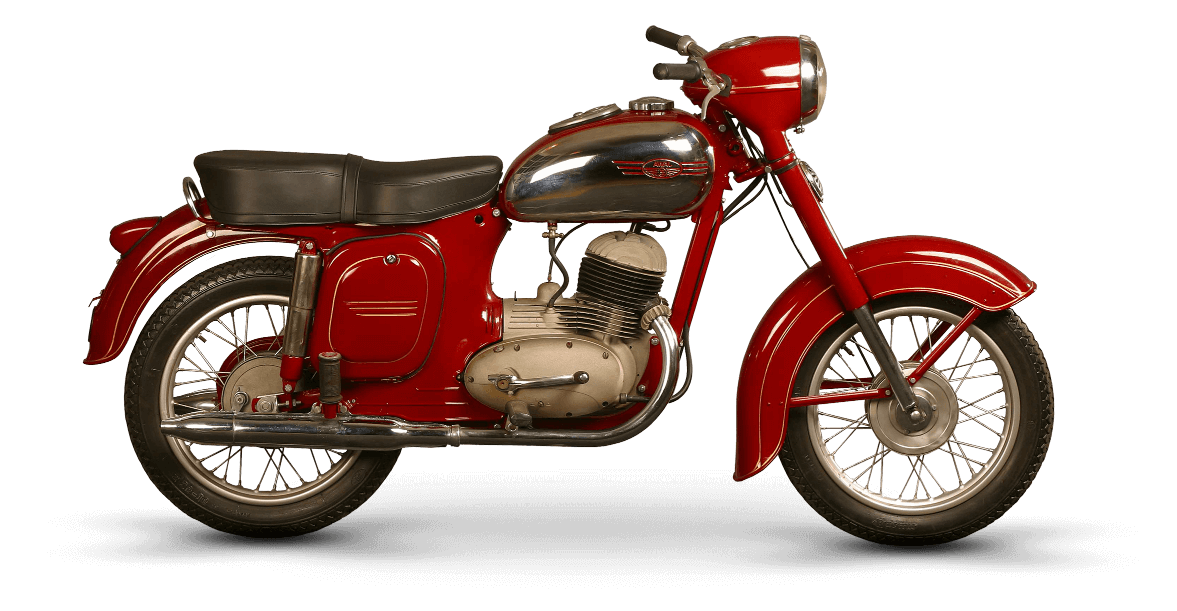
500 OHC
engine
488 cc
power
28 hp
transmission
4 speed
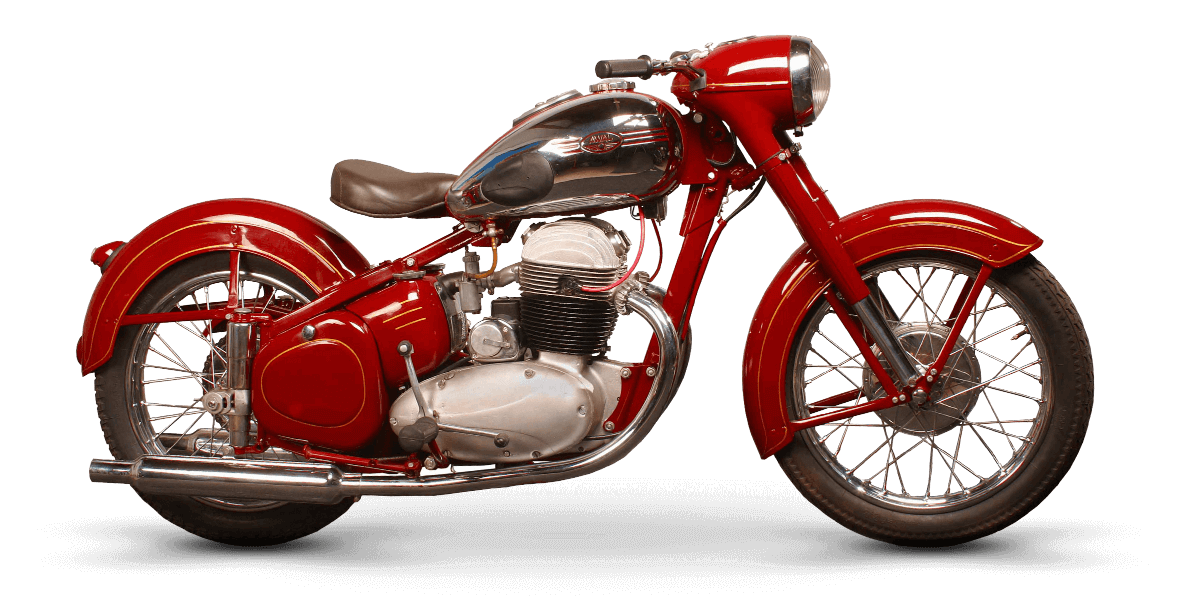
After being nationalised at the end of World War II, Jawa was merged with former competitor Česká Zbrojovka (CZ) in 1949, and both companies came under communist control.Karel Janeček left the company - and the country.
At this time, Jawa chose to build a luxury 500cc four-stroke twin - possibly to prove that in spite of the communist mandate to build basic transportation, Jawa could create superior designs.
500
engine
499 cc
power
18 hp
transmission
3 speed
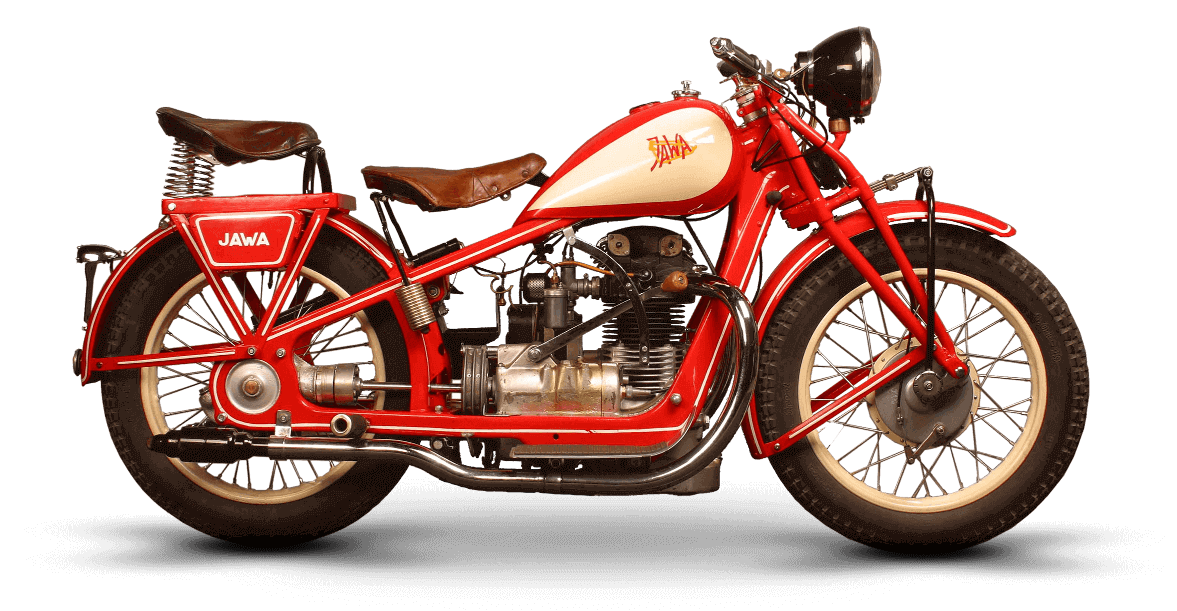
With its pressed-steel frame and shaft drive, the ‘29 Jawa was a masterpiece of its time.
However, it also came with a hefty price-tag, and only 1,016 units were produced.
Sporting a 499cc four-stroke motor with overhead valves, this gentleman tourer could reach speeds of up to 100kph.
Perak 250
engine
248.5 cc
power
9 hp
transmission
4 speed
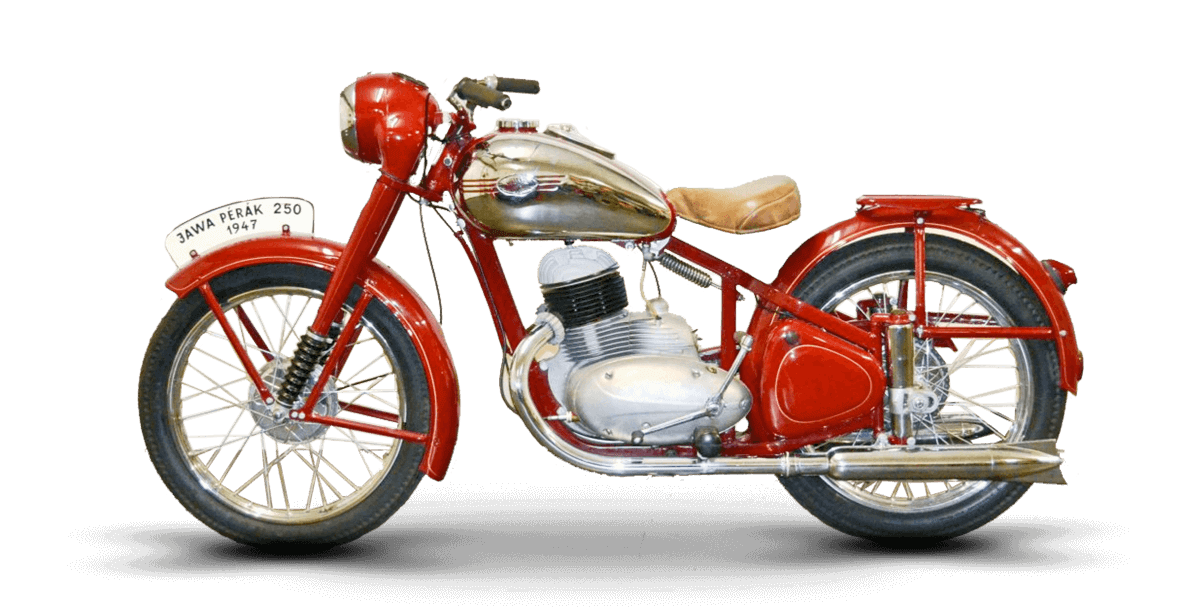
Conceived and designed under great secrecy during the Nazi occupation, the Perak was the brainchild of Janiček and the patriotic Jawa team.The first prototypes were created in a small workshop called Motožbroj in Pankrác, Prague, where Nazis would store their motorcycles. Had they been discovered, their work would have been viewed as sabotage - a crime punishable by death.
To test their prototypes on public roads, they used fake or borrowed SS and Wehrmacht registration numbers. In all, 100,000 kilometres of testing was carried out right under the eyes of the Nazis to ensure the motorcycle was ready to be launched after the war.
Perak 350
engine
344 cc
power
14 hp
transmission
4 speed
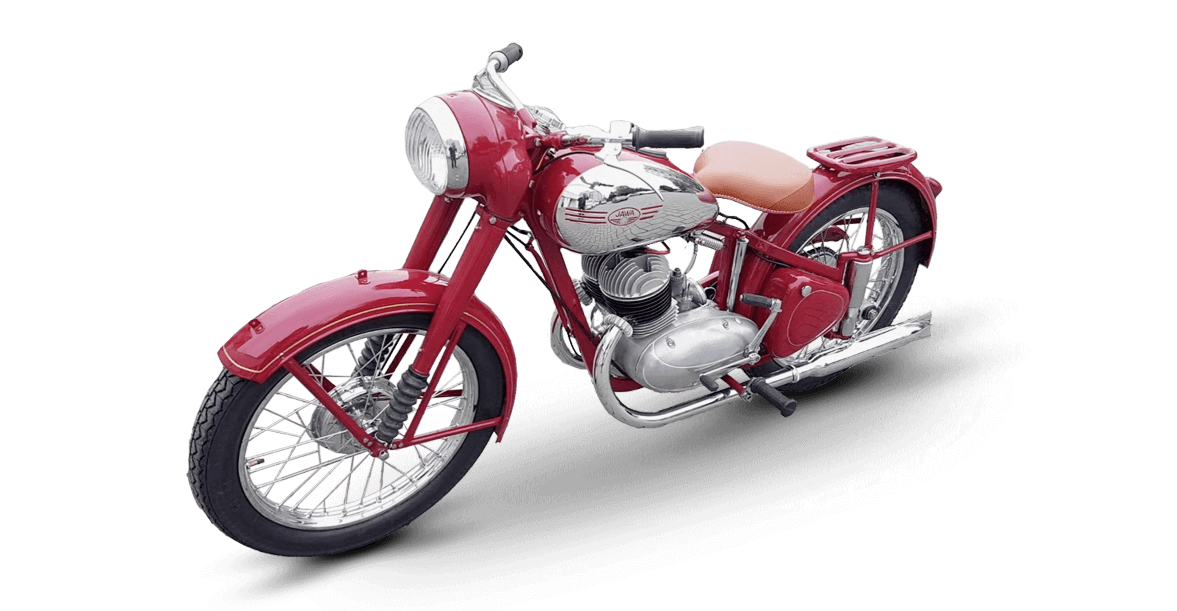
Close on the heels of the legendary Perak 250 came the similar-looking Perak 350, which added an extra cylinder for more power and torque.
Manufactured in the Ogar factory, the Jawa Perak 350 was first released under the Ogar brand.
What made the Perak motorcycles so exceptional was the engine - the two-stroke air-cooled engine and four-speed gearbox was bulletproof.
Kývačka
engine
249 cc
power
12/18 hp
transmission
4 speed
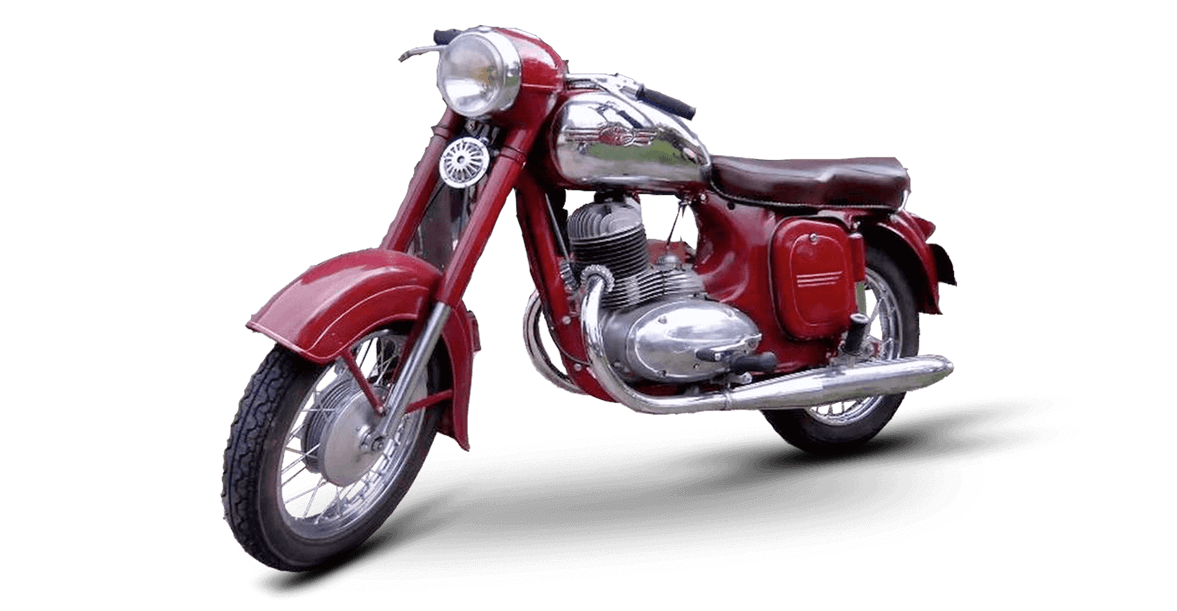
The Perak motorcycles formed the foundation for Jawa’s future two-stroke models built over the following decade. The Kývačka 250 followed the Perak 250, sporting a 12 horsepower engine - two more horsepower than the Perak 250.
A modern electric system, better brakes, and improved suspension components ensured that these motorcycles performed extraordinarily well in enduros and trials competitions, stacking up a host of comprehensive victories.This was also the model that was produced in India under licence.